
Select Your Mattress


If your bedroom has run out of wardrobe space, you have probably already looked at an ottoman bed and wondered whether the storage really justifies the price.
It's a fair question. Ottoman beds cost more than a plain base, the mechanism is one more thing that could fail, and you have to lift a mattress every time you want a spare duvet. So here is a straight assessment: what an ottoman actually gives you, where it genuinely earns its money, and the three situations where you should buy something else instead.
An ottoman is worth it if storage is your main problem, your bedroom is small, or you have no loft or spare room to absorb bulky items. Nothing else turns the same floor area into this much usable space.
An ottoman is not worth it if you only need to reach things daily, your ceiling slopes above the bed, or your budget would be better spent on the mattress.
The detail behind that follows.
An ottoman bed is a storage bed where the entire mattress platform hinges upward on gas struts, revealing a deep cavity beneath that spans the full footprint of the bed.
That last part is the whole point. A divan with drawers only uses the shallow band of space at the sides of the base. An ottoman uses everything: the full width, the full length, the full depth. The gas struts carry most of the weight of the mattress, so lifting it takes far less effort than the size suggests.
Browse the ottoman beds range to see the base styles and finishes available.
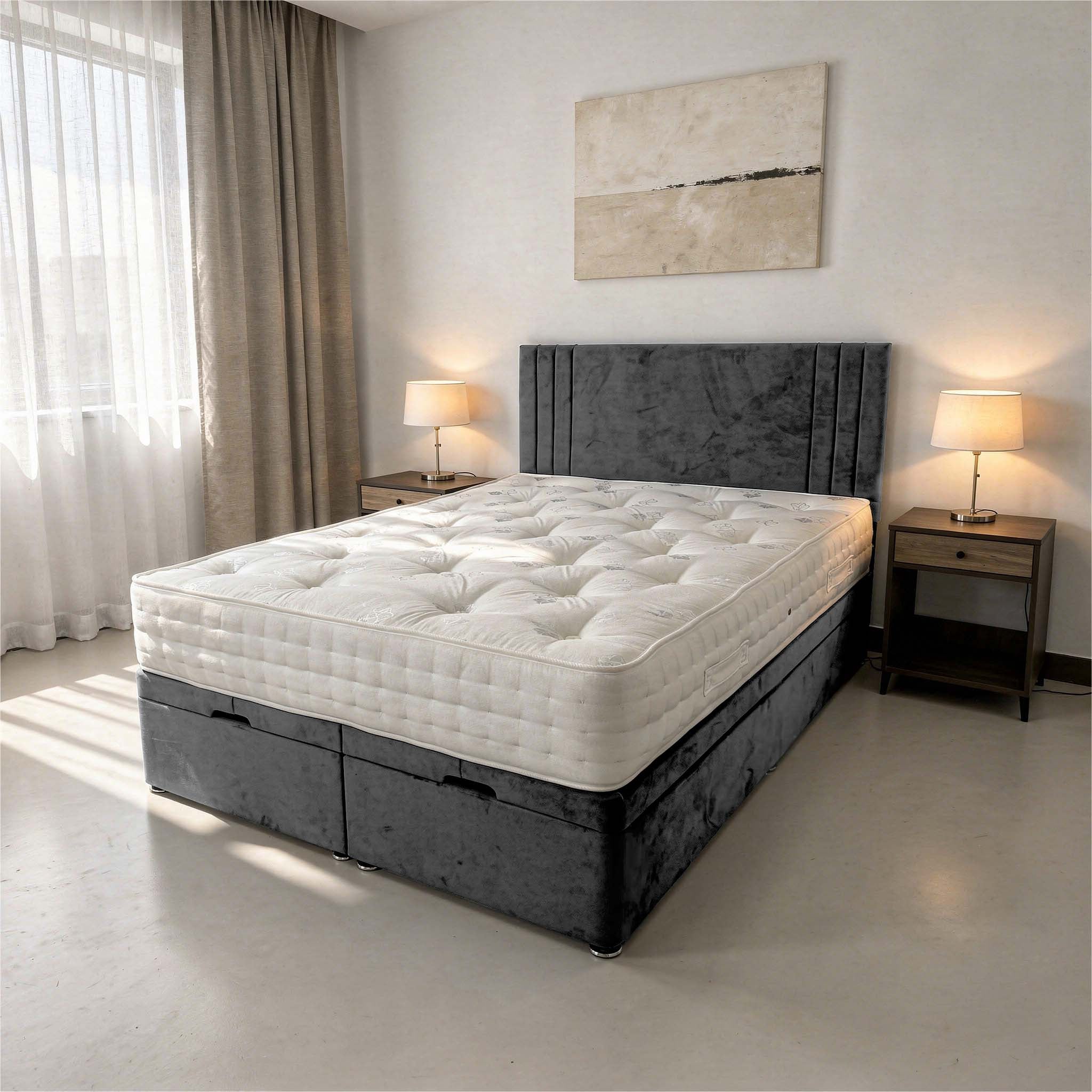
This is the comparison that decides it for most people, and the difference is larger than the showroom makes obvious.
A double divan with four drawers gives you four shallow boxes at the sides of the base. A double ottoman gives you a single cavity roughly the size of the whole bed. In practical terms, a divan handles folded clothes, bedding and smaller items. An ottoman swallows duvets, pillows, suitcases, seasonal wardrobes and Christmas decorations, all in one place.

A divan uses the drawer band at the sides. An ottoman uses the entire footprint.
There is a trade-off hiding in that comparison, and it's worth being honest about it. Drawers are faster to reach. An ottoman holds far more but asks you to lift the mattress each time, so it suits things you need seasonally rather than daily.
This is the decision people most often get wrong, and it's difficult to reverse once the bed is built.
End-lift opens from the foot of the bed. The platform swings up toward the headboard, so you need clear floor space at the end of the bed to stand while it opens. This suits a bed positioned with its head against a wall and open floor in front.
Side-lift opens from the long edge. You need a clear floor along one side instead. This is the answer when the foot of the bed faces a wall, a wardrobe or a radiator, which is common in narrow rooms.
Measure before ordering. Stand where you would actually open the bed and check that nothing blocks the swing: a radiator, a sloping ceiling, a wardrobe door, a window sill.

Check which direction your room can actually give you before you order.
Unmatched storage capacity. No other bed base converts this much dead space into usable storage. In a small bedroom this can genuinely remove the need for a chest of drawers, which frees up more floor than the bed itself occupies.
It works where drawers cannot. Because the storage opens upward rather than sideways, an ottoman can sit flush against a wall on one or both sides. A divan with drawers always needs clearance beside it.
Easy to use despite the size. The gas struts do most of the lifting. Most people are surprised how light a quality ottoman platform feels.
Clean lines. With no drawer fronts, the base reads as a single upholstered form, which suits contemporary bedrooms.
Keeps bulky items out of sight. Duvets, spare pillows and suitcases are exactly what an ottoman is for, and exactly what has nowhere else to live in a flat or a modern house with no loft hatch.
You have to clear the bed to open it. Anything on top comes off first. This is the real daily cost of an ottoman and the reason it suits seasonal storage rather than everyday items.
It needs clearance to lift. Sloping ceilings, low beams and high headboards can all interfere with the swing. Check the vertical clearance as well as the floor space.
Higher upfront cost. You pay for the mechanism and the reinforced base. Whether that's good value depends entirely on how badly you need the storage.
The mechanism is a moving part. Gas struts are reliable and replaceable, but they are a component a plain base does not have. Buy a well-made one and avoid loading the cavity beyond what the struts are rated for.
Heavier to move. A reinforced base with a lifting platform is more awkward to relocate than a divan that splits in two.
For the right room, yes, and the case is strongest in small bedrooms.
Think of it as buying storage rather than buying a bed. If you would otherwise need a chest of drawers, a blanket box or a wardrobe you have no room for, an ottoman delivers that capacity using floor space the bed already occupies. Measured that way it's often the cheapest storage in the house.
It stops being worth it in three situations. If you have a loft, a garage or a spare room already absorbing bulky items, the capacity is solving a problem you don't have. If you only ever need daily-access items, drawers serve you better. And if choosing an ottoman means compromising on the mattress, buy the better mattress: the base shapes the room, but the mattress shapes how you sleep.
Small bedrooms and box rooms: the strongest case of all. Storage without surrendering floor space.
Flats and homes with no loft: nowhere else for suitcases and spare bedding to go.
Narrow rooms: a side-lift ottoman works where drawers physically cannot open.
Minimalist bedrooms: no drawer fronts, no handles, clean upholstered lines.
Guest rooms: spare bedding stored in the room it's actually needed in.
And who should not:
Anyone needing daily access: choose a divan with drawers instead.
Rooms with sloping ceilings over the bed: check clearance, or go for drawers.
Tight budgets where the mattress is the priority: spend it on the mattress.
Compare the alternatives across our full bed range before deciding.
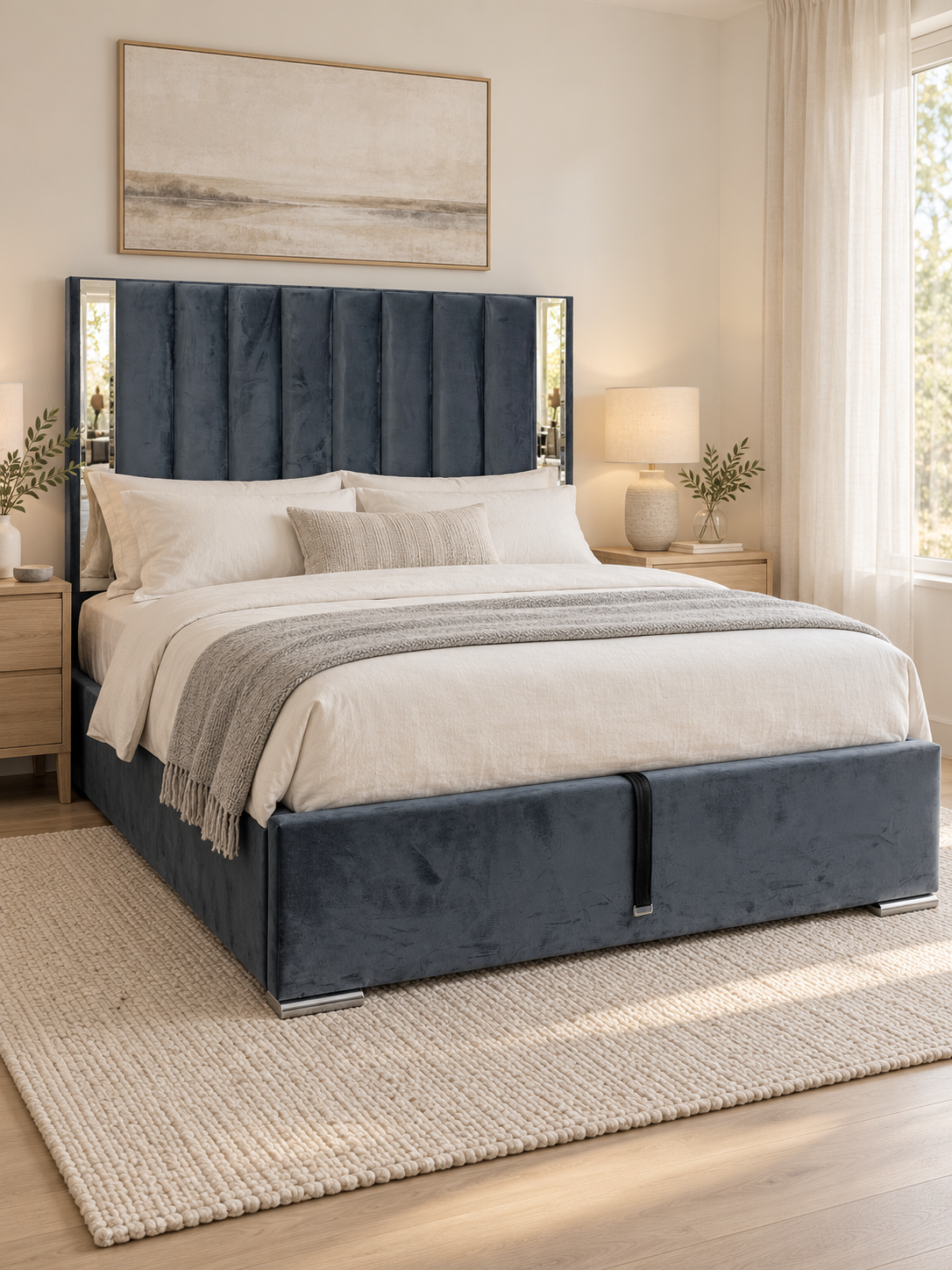
Measure the lift, not just the bed. Floor clearance in the opening direction, plus vertical clearance above.
Check the strut rating. Better ottomans state the weight the mechanism is designed to lift, which matters with a heavier mattress.
Mind the mattress weight. A very heavy mattress makes any ottoman harder to lift. Factor this in if mobility is a consideration.
Think about headboard height. A tall headboard can limit how far the platform travels.
Check access for delivery. An ottoman base arrives as one rigid unit, so unlike a divan it will not split to get up a tight staircase.
If storage is your main constraint, yes. An ottoman uses the entire footprint under the bed rather than just the drawer band at the sides, which makes it the most space-efficient storage bed available. It is less worthwhile if you have other storage, need daily access, or would be compromising on the mattress.
A divan has a solid base with optional drawers at the sides. An ottoman has a platform that lifts on gas struts to reveal storage across the whole footprint. Divans offer faster access and easier delivery; ottomans offer far more capacity.
Neither is better outright; it depends on your room. End-lift needs a clear floor at the foot of the bed, side-lift needs a clear floor along one side. Choose based on which direction your room can give you.
No. Gas struts carry most of the weight, so the platform feels much lighter than the mattress alone. A very heavy mattress will make it harder, so check the strut rating if yours is substantial.
Most mattresses work, but weight matters more than on other bases. Very heavy mattresses can strain the mechanism and make lifting harder, so check the manufacturer's stated limit.
The struts are the only moving part and are generally reliable, as well as replaceable if they do weaken over years of use. Avoid overloading the cavity and the mechanism should last the life of the bed.
Capacity is hard to judge from a photograph, and the lift is hard to judge from a description. Browse our ottoman beds online, or visit our Leeds showroom where you can open one yourself, check your access measurements with our team and compare it against a divan side by side. Get in touch today.
